
Trial 10: Exploring Contact Time and Dosage Rate with Oak Alternatives to Achieve Targeted Sensory Results in Whiskey
By Andrew Wiehebrink, Director of Spirit Research and Innovation
Introduction
During an era of innovation, oak alternatives are becoming an important tool for spirit maturation. Oak alternative products may be toasted using different types of technology to impart traditional oak flavors or offer new flavors. They are also versatile in application, with numerous product formats and configurations available that may be applied to spirits during maturation or finishing to achieve a desired organoleptic profile.
Objective
This experiment measures the impact of contact time and dosage rate on four oak alternative products applied as a finishing process. Finishing is a technique utilized post maturation to add specific nuances or enhance the impact of the initial maturation period.
Methods
The Oak:
• Sweet Shoppe
• Spice Rack
• Rickhouse
• Charred Barrel
The Liquid
Variety: 8-year-old Canadian whiskey, distilled to 94%
Mash Bill: 100% corn
Entry Proof: 72.87 ABV
Trial Execution
Entry Date: December 2018
Maturation Period: 2, 4, 6 and 8 weeks
The Trial
The oak alternatives were tested in two different formats:
- Stave Inserts- 28” x 2.5” x 0.375”
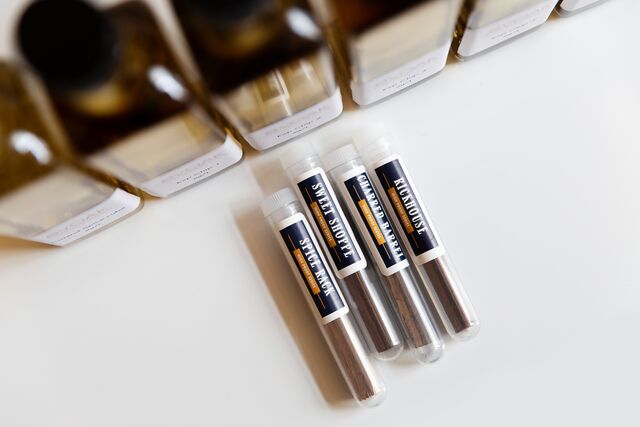
- Oak Flavoring Stix- 1 unit – 17 sections containing two 8” x 1.25” x 0.375” pieces
For the trial, 78 previously filled barrels were used, each with a 53-gallon capacity.
- 6 control barrels with no oak alternative products added
- Barrels with Sweet Shoppe products:
6 barrels dosed at 6 g/L (5 stave inserts)
6 barrels dosed at 12 g/L (10 stave inserts)
6 barrels dosed with 1 unit of oak flavoring stix at 7.65 g/L
- Barrels with Spice Rack products:
6 barrels dosed at 6 g/L (5 stave inserts)
6 barrels dosed at 12 g/L (10 stave inserts)
6 barrels dosed with 1 unit of oak flavoring stix at 7.65 g/L
- Barrels with Rickhouse products:
6 barrels dosed at 6 g/L (5 stave inserts)
6 barrels dosed at 12 g/L (10 stave inserts)
6 barrels dosed with 1 unit of oak flavoring stix at 7.65 g/L
- Barrels with Charred Barrel products:
6 barrels dosed at 6 g/L (5 stave inserts)
6 barrels dosed at 12 g/L (10 stave inserts)
6 barrels dosed with 1 unit of oak flavoring stix at 7.65 g/L
Samples were taken from each barrel every two weeks and analyzed using
Gas Chromatography-Mass Spectrometry (GCMS).
Results and Discussion
The data is presented in graphs as a percent of the average. An average of all samples was calculated for each compound.
Sweet Shoppe
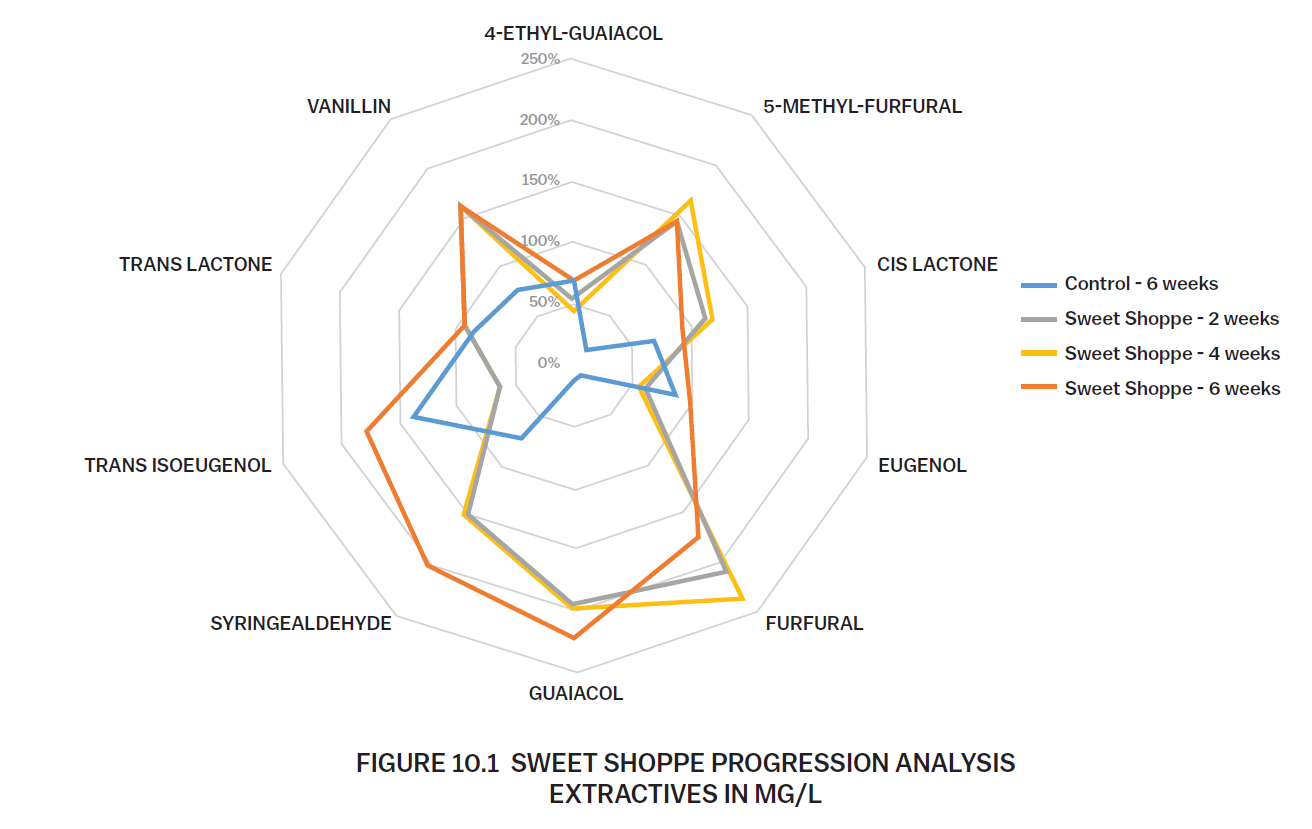
This product was developed to focus on confectionary characters, including caramel, vanilla and candied fruit, as well as rich flavor and a smooth mouthfeel. GCMS analysis presented in Figure 10.1 confirms:
- A significant increase in extractive concentration compared to the control whiskey.
- Notable spikes in vanillin, responsible for vanilla, and furanic compounds responsible for caramel and toasty character.
- By six weeks of contact time, guaiacol and eugenol compounds begin to have a stronger influence on the flavor profile. These compounds will add depth and complexity but will also reduce the perception of sweetness.
Rickhouse
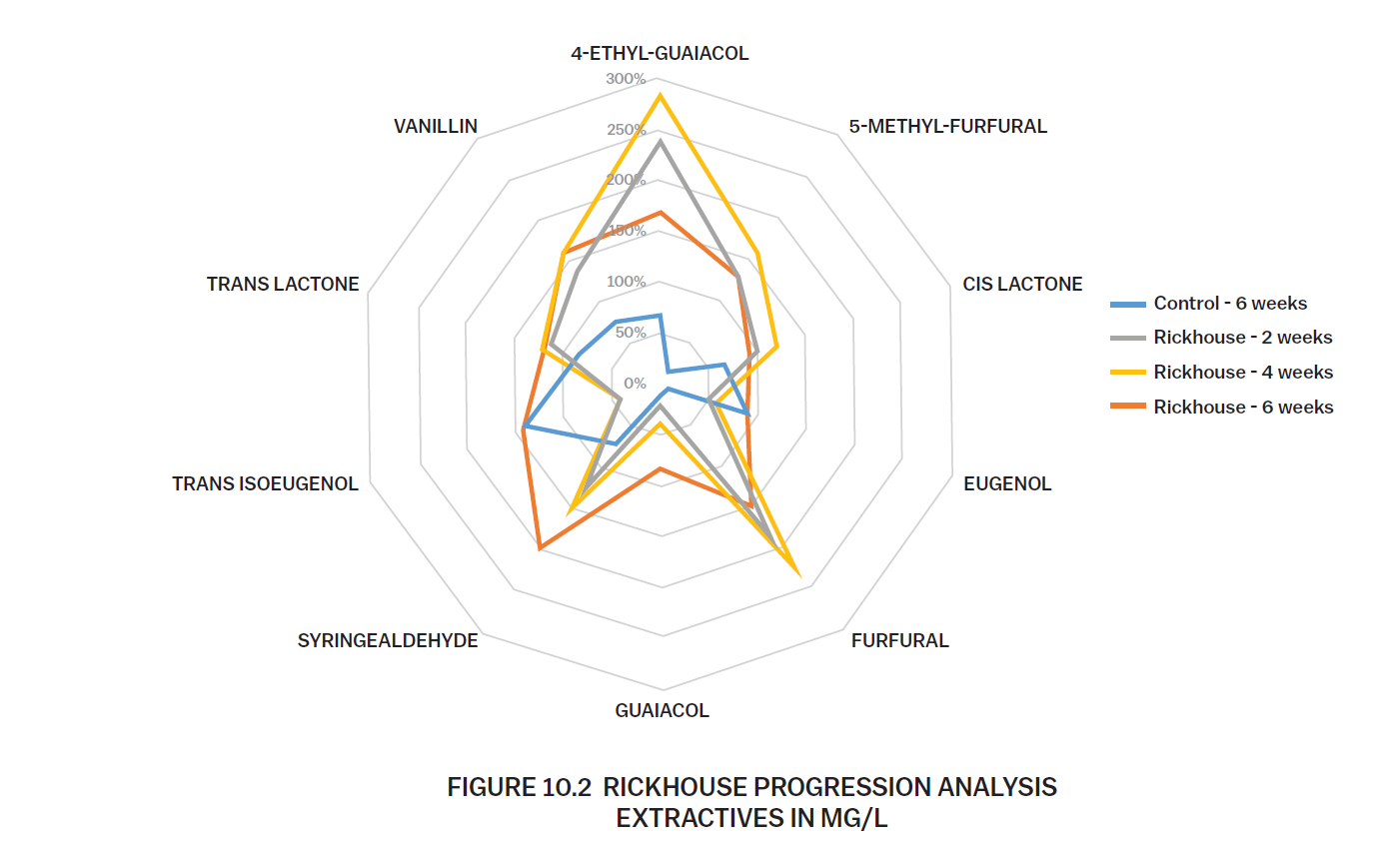
This product was developed to focus on fresh, toasted oak flavors with a touch of smoke along with honey and spice. GCMS analysis shown in Figure 10.2 indicates:
- A significant increase in extractive concentration compared to control whiskey.
- Prominent spikes in syringaldehyde, furfural and 4-ethyl-guiacol, which indicate a broad range of added flavor. Specifically, this signifies the addition of woody, smoky and toast characters.
- This product is high impact in the first four weeks of contact time. Sensory analysis is important to find the right balance.
Spice Rack
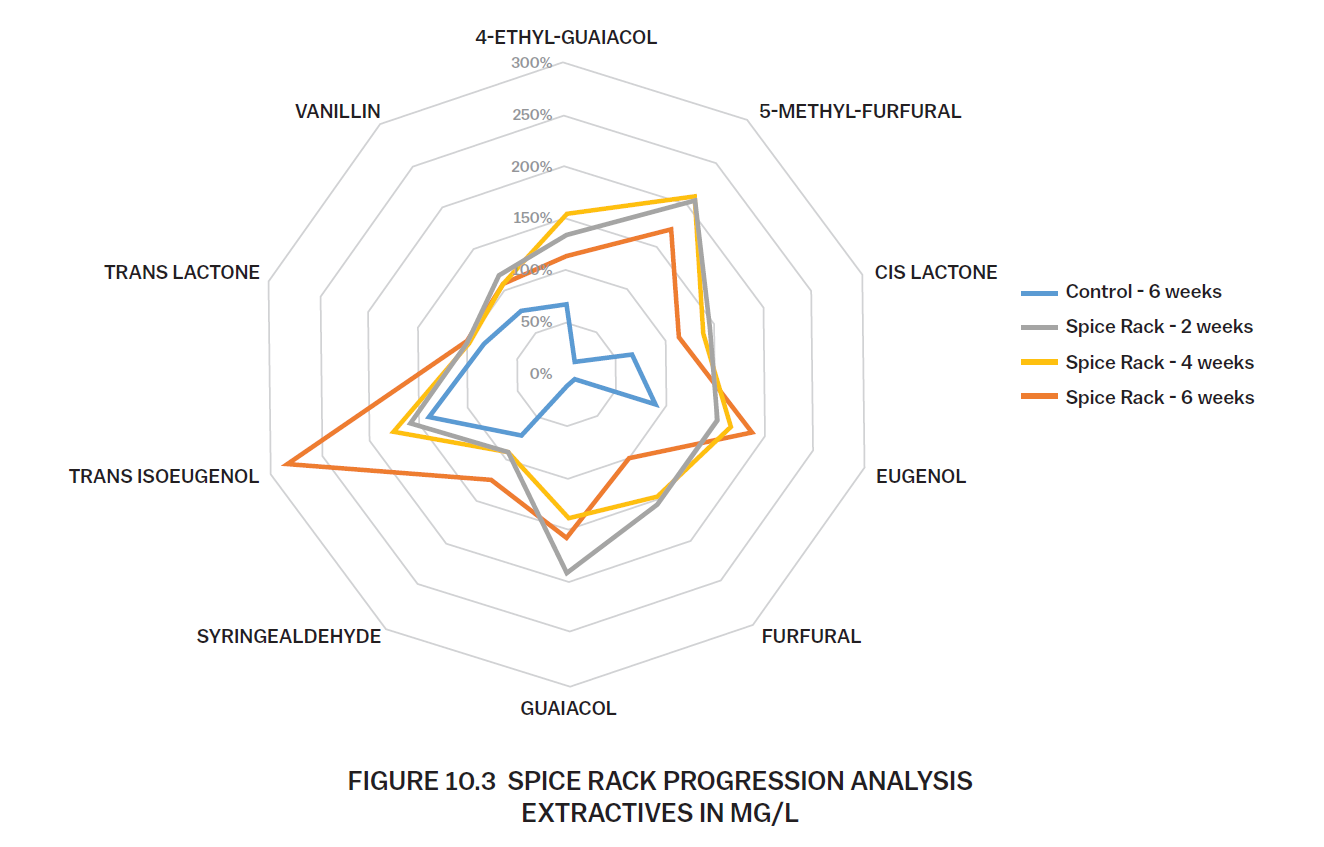
This product was developed to offer a plethora of aromas and flavors, including baking spices, maple syrup and dried citrus. GCMS analysis of this product in
Figure 10.3 confirms:
- A significant increase in extractive concentration compared to the control whiskey.
- Prominent spikes in both eugenol and isoeugenol, indicating a strong spice component in the flavor profile. Eugenols continue to increase in concentration over the extraction period of six weeks.
- Notable increase in guaiacol over the control whiskey. The presence of this compound suggests slightly smoky character will be extracted using
this product.
Charred Barrel
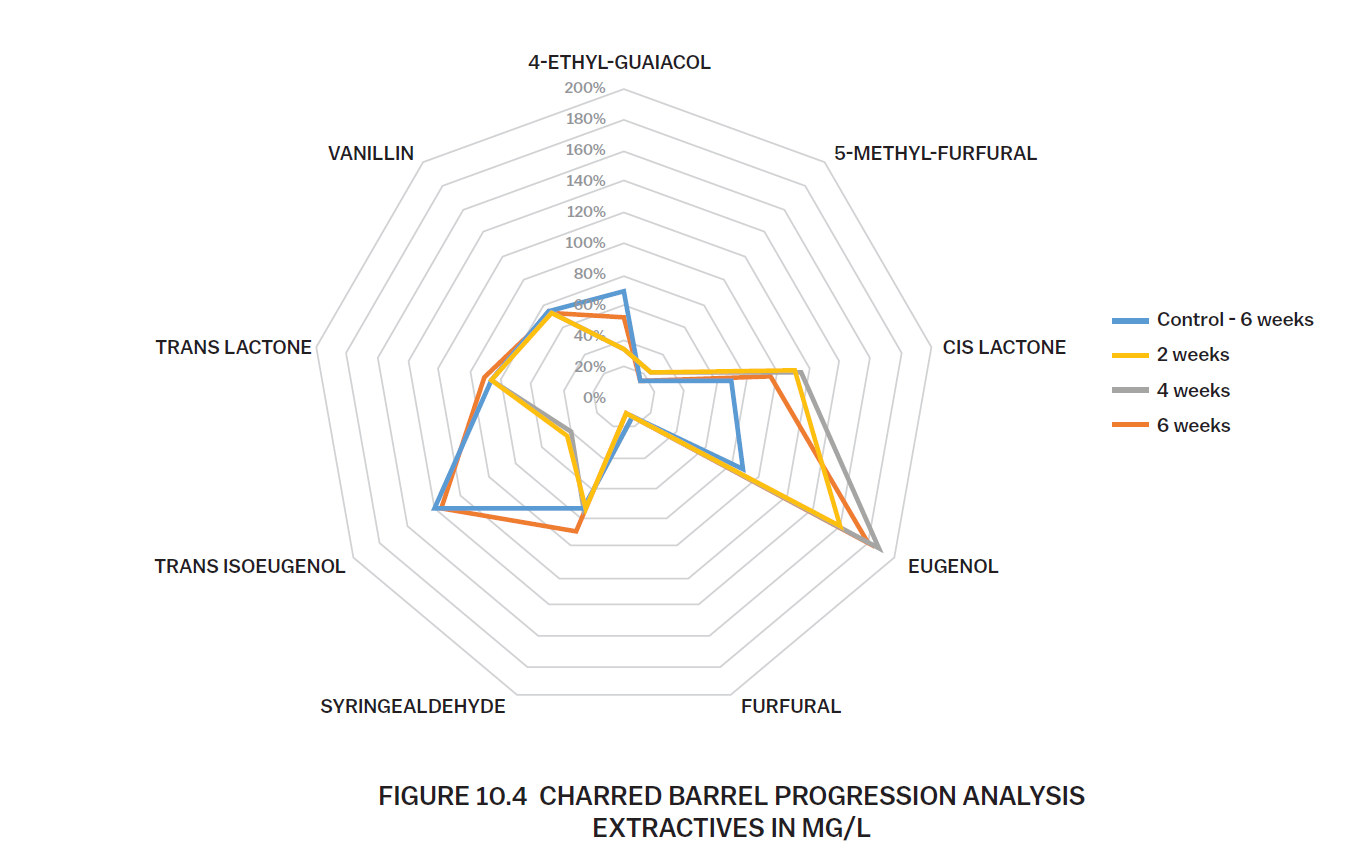
This product was developed by our sister company, Oak Solutions Group, to mimic some of the key flavor characteristics of a charred American oak barrel, including fresh oak, lactones and estery characters. GCMS analysis presented in Figure 10.4 shows:
- A moderate overall impact compared to the control whiskey.
- An increase in cis lactone during the first weeks of contact time followed by a slight reduction at six weeks.
- A prominent increase in eugenol, which signifies the addition of spice character to the whiskey.
- A low impact in the other lignin and hemicellulose-derived compounds such as furfural and vanillin, matching the mellow overall oak impact desired for this product.
Dosage Rate
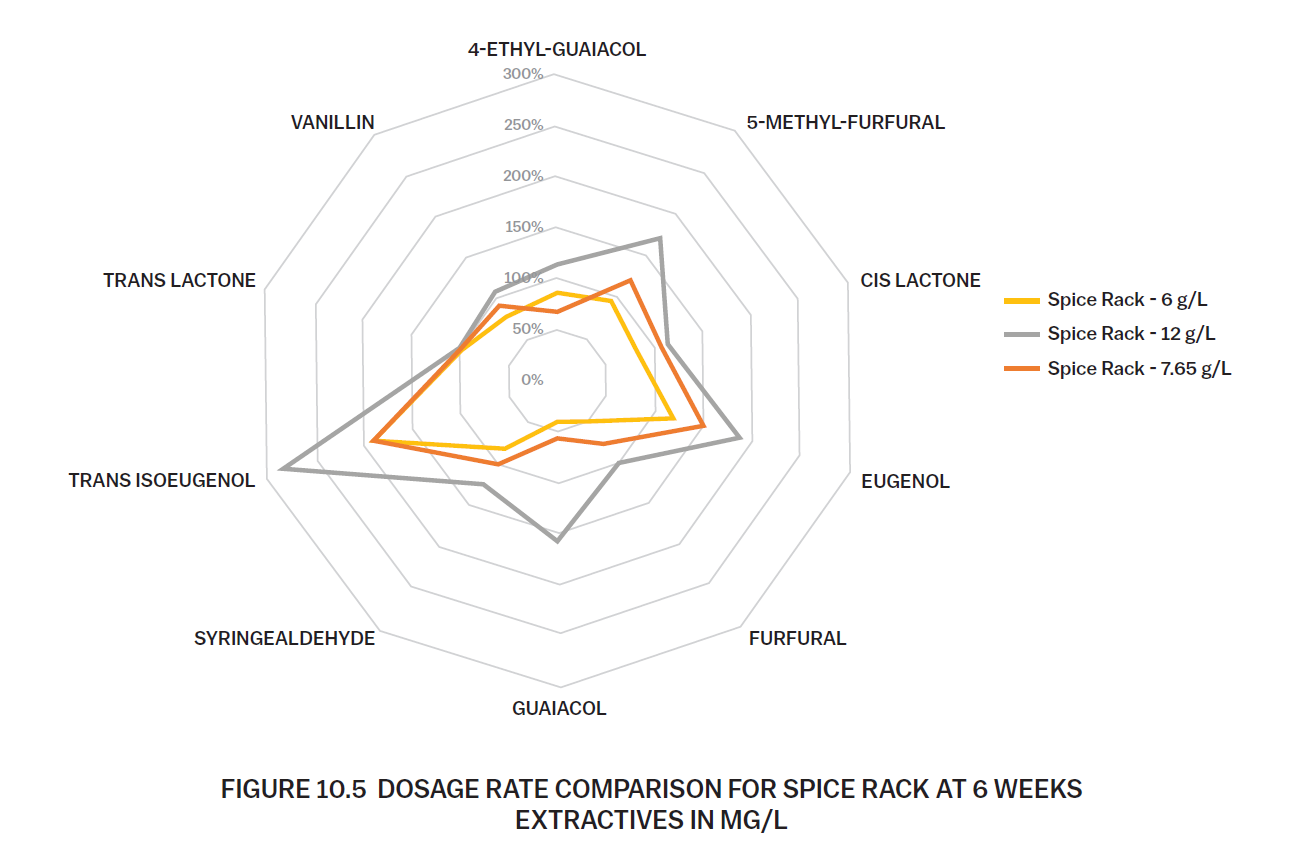
This experiment also explored how dosage rate of the oak products impacted the finished product. Figure 10.5 presents the data for the Spice Rack product at six weeks of contact time. Three different dosage rates were used: 6 g/L, 12 g/L and one set of barrels dosed with a single oak flavoring stix at 7.65 g/L.
The dosage rate had a noticeable effect on the progression of extractive concentration:
- The barrel insert application at 12 g/L provides the largest increase in extractive concentration.
- The oak flavoring stix application at 7.65 g/L provides the second largest increase, thereby indicating the increased surface area of this product in contact with the whiskey has a significant effect on flavor development.
Conclusions
This experiment validated oak alternatives as a useful tool to differentiate and distinguish base whiskeys or other matured distilled spirits. By utilizing techniques such as those described in this document, producers can create multiple products—with very different flavor profiles—utilizing a single liquid stream. This experiment also confirmed this can be done in a short period of time.
The data also exhibits the significance of contact time and dosage rate as critical considerations to developing the organoleptic profile of a spirit during finishing:
- The amount of contact time between the product and the spirit will lead to different nuances in the spirit.
Longer contact time is not necessarily proportional to a larger increase in extractive concentration.
During application of the High Proof series’ products, the sensory impact will change from week to week, and certain products will induce changes more quickly than others. It is recommended to monitor the flavor development progress regularly during the anticipated contact time and to remove the application once the desired profile is achieved. - Dosage rate may also be adjusted to achieve the desired result from the product being used. Oak extractives can be increased through a higher dose rate or selecting a configuration with increased surface area.
Books are available through your account manager.
Contact Chad Spalding for a sample kit.